Fragrance Oils
Attar vs Perfume Oil vs EDP: What Is the Difference and Which Should Your Brand Sell?
By Black Oud Factory
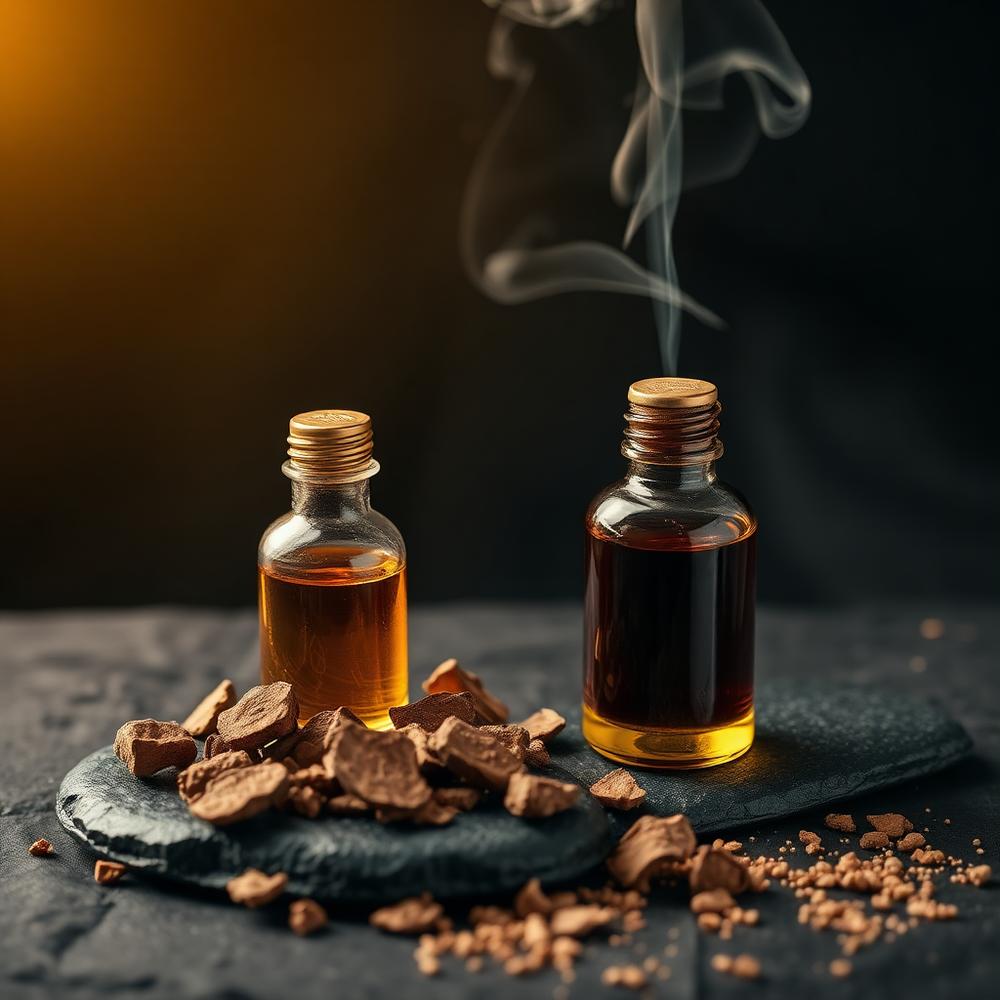
Attar, perfume oil and eau de parfum differ in base, strength, packaging, cost and market. This guide explains each format so you can choose the right one for your brand.
Attar is a concentrated, alcohol-free perfume traditionally made by capturing botanicals in an oil base, perfume oil is a fragrance compound blended into a carrier oil or worn neat, and eau de parfum (EDP) is a fragrance compound diluted in perfumer's alcohol, usually at around 15 to 20 percent. For a brand, the right choice depends on your market, price point, packaging and how customers expect to apply the scent, and many Gulf-focused brands sell more than one format from the same fragrance.
Quick Summary
- Attar and perfume oil are alcohol-free and applied directly to the skin with a roll-on, dab-on stick or dropper.
- EDP is alcohol-based and sprayed; the alcohol evaporates and carries the scent into the air.
- In the UAE and wider Gulf trade, the word attar is often used for any concentrated oil perfume, not only traditionally distilled oils.
- Oil and alcohol formats need different maceration, packaging materials and stability checks.
- Black Oud Factory supplies attar and perfume oil in bulk by the kilo or filled under your brand, with a finished-product MOQ of 100 units per fragrance and per bottle size.
What Is Attar?
Attar, also written ittar, comes from the Arabic word for scent. In its traditional form, flowers, herbs, woods or resins are distilled and their aromatic vapour is collected in a base oil, historically sandalwood oil. The result is a rich, oil-based perfume with no alcohol.
In today's market, attar has a broader meaning. Many buyers in the UAE, Saudi Arabia and across the Gulf use attar to describe any concentrated perfume oil in a small decorative bottle, including blends built from modern fragrance compounds, oud, musk, amber and rose. When you brief a manufacturer, say clearly whether you want a traditional-style attar or a modern concentrated oil, because the raw materials and cost are very different.
Typical attar profiles
- Oud-forward and mukhallat blends that combine oud with rose, amber or musk.
- Floral attars built around rose, jasmine or other white flowers.
- Amber and musk attars that sit close to the skin and last for many hours.
- Woody attars featuring sandalwood, agarwood or vetiver notes.
What Is Perfume Oil?
Perfume oil is a fragrance compound supplied either neat or diluted in a skin-suitable carrier. The carrier can be a natural oil or a cosmetic-grade synthetic carrier chosen for clarity, low odour and stability. Because there is no alcohol, the scent stays close to the skin and is released slowly by body heat.
There is no single fixed concentration for perfume oil or attar. The fragrance load depends on the specific blend, the carrier, the intended use and the safety assessment of the finished formula. A perfume oil sold as a roll-on for daily wear may be formulated differently from a strong oud oil sold in a 3ml dab-on bottle. Ask your manufacturer for the formula's fragrance percentage and confirm it meets IFRA limits for leave-on skin products.
What Is Eau de Parfum?
Eau de parfum is an alcohol-based spray. The fragrance compound is diluted in perfumer's alcohol, often with a small amount of water and sometimes a fixative or UV stabiliser. EDP typically contains around 15 to 20 percent fragrance oil, which gives good projection and longevity while keeping the cost per bottle controlled.
EDP needs a maceration period after blending so the fragrance and alcohol settle together, followed by chilling and filtration before filling. It is then filled into spray bottles fitted with crimp or screw pumps and caps.
Attar vs Perfume Oil vs EDP: Side-by-Side Comparison
- Base: attar uses an oil base, traditionally sandalwood; perfume oil uses a carrier oil or is sold neat; EDP uses perfumer's alcohol.
- Application: attar and perfume oil are applied by roll-on, dab-on stick or dropper; EDP is sprayed.
- Projection: attar and perfume oil stay closer to the skin; EDP projects further, especially in the first hours.
- Longevity: oil formats are known for long wear on skin; EDP longevity depends on the concentration and the fragrance structure.
- Typical pack sizes: oils are usually sold in 3ml, 6ml and 12ml roll-ons or decorative attar bottles; EDP is commonly sold in 30ml to 100ml spray bottles.
- Packaging: oils need materials and seals that resist oil; EDP needs alcohol-resistant pumps, gaskets and coatings.
- Shipping: alcohol-based EDP is classed as a flammable liquid for transport; oils have different handling, which must be confirmed from the product's MSDS.
- Customers: oils suit customers who prefer alcohol-free perfume and traditional Gulf fragrance habits; EDP suits mainstream retail and gifting.
Which Format Should Your Brand Choose?
Choose attar or perfume oil if
- Your customers ask for alcohol-free fragrance.
- You sell oud, musk and mukhallat profiles to Gulf, South Asian or traditional fragrance buyers.
- You want a small, giftable product at an accessible price point per piece.
- You plan to sell through perfume souks, gift shops or online stores where roll-ons are popular.
Choose EDP if
- You are building a mainstream retail or department-store range.
- Your brand story relies on a premium spray bottle, cap and box.
- Customers expect projection and a scent trail rather than a skin scent.
- You plan gift sets combining 50ml or 100ml sprays with matching accessories.
Offer both from one fragrance
Many brands launch a signature scent as an EDP and add an oil version of the same accord. This lets you serve two customer groups without developing a new fragrance. The oil version usually needs reformulation rather than simple dilution, because a compound that performs well in alcohol can smell different in oil.
How Manufacturing Differs Between Oil and Alcohol Formats
Although all three start from a fragrance compound, the production steps differ in ways that affect quality, timeline and cost.
- Blending: oils are blended with a carrier or kept neat; EDP is blended with alcohol and sometimes water.
- Maceration: both benefit from resting, but EDP is usually macerated, chilled and filtered to remove haze before filling.
- Stability: oils are checked for colour change, separation and oxidation; EDP is checked for clarity, colour and pump compatibility.
- Filling: oils are filled into roll-ons, dab-on bottles or decorative attar bottles; EDP is filled and crimped or screwed into spray bottles.
- Packaging tests: roller balls, wands and caps must not leak oil; spray pumps must deliver a consistent dose.
Practical Checklist Before You Order
- Decide the format first: attar, perfume oil, EDP, or a combination.
- Share a reference scent or a brief with the fragrance family, target market and price point.
- Ask for samples in the final format, not only the raw compound on a blotter.
- Test oil samples on skin over a full day and EDP samples on skin and fabric.
- Confirm the fragrance percentage and IFRA compliance for the finished product.
- Choose packaging that is compatible with the base: oil-safe roll-ons or alcohol-resistant pumps.
- Request MSDS and a certificate of analysis for bulk oil or export shipments.
- Plan quantities against the MOQ of 100 units per fragrance and per bottle size for finished products.
Buying Attar and Perfume Oil in Bulk
If you already have your own filling line or retail packaging, you can buy concentrated oil in bulk. Black Oud Factory supplies bulk concentrate by the kilo in sealed drums or jerrycans with batch labelling, MSDS and a certificate of analysis. If you prefer a finished product, the same blend can be filled into roll-ons, dab-on bottles or decorative attar bottles with caps and gift boxes under your brand. For prices on either route, contact us for a quote.
Frequently Asked Questions
Is attar the same as perfume oil?
In everyday Gulf trade the terms are often used interchangeably. Strictly, traditional attar is made by distilling botanicals into an oil base, while perfume oil is a fragrance compound blended into a carrier or sold neat. Both are alcohol-free.
What is the oil concentration in attar?
There is no single standard. Some attars are sold neat, while others are diluted in a carrier. The right level depends on the blend, the carrier and the safety assessment of the finished product, so ask your manufacturer for the exact fragrance percentage.
Does attar last longer than EDP?
Oil perfumes are known for long wear close to the skin because there is no alcohol to evaporate. EDP projects more strongly at first. Real performance depends on the fragrance structure, so compare both formats on skin before deciding.
Can I turn my EDP into a perfume oil?
Yes, but it usually needs reformulation. Removing the alcohol and adding a carrier changes how the fragrance opens and develops, so the perfumer adjusts the blend and you approve new samples.
What is the minimum order for private-label attar?
For finished filled products, the MOQ is 100 units per fragrance and per bottle size. Bulk oil minimums are quoted per fragrance and depend on the raw materials used.
Conclusion
Attar, perfume oil and EDP are not competing products so much as different ways to deliver a fragrance. Attar and perfume oil serve customers who want alcohol-free, skin-close scent and traditional Gulf profiles, while EDP serves mainstream retail and premium gifting. Decide the format around your customer, test samples in the final format, and choose packaging that matches the base. If you want to compare formats for your own brand, share your brief and we will recommend a route.
Contact Black Oud Factory for a quote — Mobile / WhatsApp: +971 56 625 4829 (wa.me/971566254829) · Email: blackoudfactory@gmail.com · Request a quote: blackoudfactory.com/get-quote