
Fragrance Oils
What Percentage of Fragrance Oil Goes in a Car Diffuser?
By Black Oud Factory
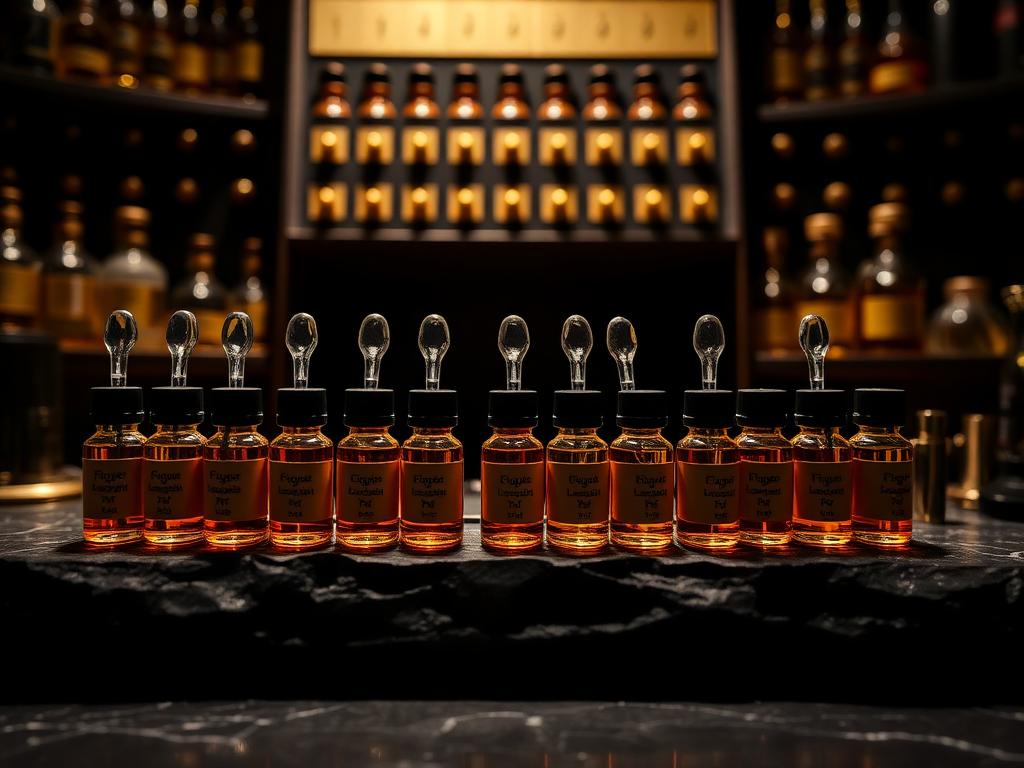
Car diffusers commonly start at 20–30% fragrance oil, but the right load depends on the format, the oil and UAE heat. Here is how to calculate and test it.
Most car diffusers use a fragrance oil load of roughly 20–30% in a diffuser base, but the right percentage depends on the format: vent clips and pad-based refills often run higher, alcohol-based car sprays run lower, and gel or bead formats follow the base supplier's maximum load. Treat these figures as starting points and confirm the final percentage with stability, leak and heat testing in the actual container.
Quick Summary
- Hanging glass bottles with a wooden or porous cap commonly start at 20–30% fragrance oil in a diffuser base.
- Vent clips, felt pads and membrane refills often use a higher load, and some systems are designed for neat or near-neat oil.
- Alcohol-based car and room sprays usually sit lower, commonly in the 5–15% range.
- Always calculate the percentage by weight, not by volume, so batches stay consistent.
- Car interiors get very hot in the UAE summer, so heat, leak and plastic-compatibility tests matter as much as scent strength.
- Ask your fragrance oil supplier for the MSDS, certificate of analysis and IFRA guidance for the oil before you finalise the formula.
Why There Is No Single Correct Percentage
A car diffuser is not one product. It is a family of formats that release fragrance in very different ways. A wooden cap on a hanging bottle wicks liquid slowly through porous material. A vent clip relies on moving air across a pad or membrane. A spray releases a fine mist that evaporates within minutes. Each format needs a different balance between fragrance oil and base to perform well without leaking, staining or burning out too fast.
Three things set the percentage: how the format releases scent, how strong and volatile the specific fragrance oil is, and how much heat the product will face. A fresh citrus oil evaporates quickly and may need a higher load to last, while a heavy oud or amber accord can smell strong at a lower load. This is why two brands selling the same bottle can use quite different formulas.
Typical Starting Points by Car Diffuser Format
The ranges below are common starting points used in home and car fragrance development. They are not legal limits and not guaranteed results. Use them to build your first test batches, then adjust.
Hanging glass bottle with wooden or porous cap
This is the classic hanging car perfume. A starting point of 20–30% fragrance oil in a clear diffuser base is common. Too low and the scent is weak; too high and the cap can saturate, drip or darken. The cap material and the bottle neck size both affect how quickly liquid moves into the wood.
Vent clip with felt pad or membrane refill
Vent clips are exposed to direct airflow, so they usually need a stronger load. Many pad-based systems run above 30%, and some membrane refills are engineered for neat or near-neat fragrance oil. Follow the refill or membrane supplier's specification, because the wrong viscosity can block the membrane or cause leaks.
Reed-style car diffuser
Small reed diffusers for cars behave like home reed diffusers and commonly start around 20–30%. The base must be thin enough to travel up the reeds but not so volatile that it evaporates in a few days of heat.
Car and room spray
Sprays are usually alcohol-based and commonly use a lower load, often 5–15%, because they are released as a mist and should not leave oily marks on seats or dashboards.
Gel, beads and solid formats
Gels and polymer beads absorb a set amount of fragrance. Use the maximum load stated by the gel or bead base supplier, then test for sweating, shrinkage and scent life.
How to Calculate Fragrance Oil Percentage
Always work by weight on a calibrated scale. Fragrance oils and bases have different densities, so measuring by millilitres gives inconsistent results from batch to batch.
- Formula: fragrance percentage = weight of fragrance oil divided by total batch weight, multiplied by 100.
- Example at 25%: for a 1,000 g batch, weigh 250 g of fragrance oil and 750 g of diffuser base.
- Example at 30%: for a 1,000 g batch, weigh 300 g of fragrance oil and 700 g of diffuser base.
- Record the oil batch number, base batch number and exact weights for every production run.
For a deeper explanation of loading across perfume, attar and home fragrance products, see our fragrance oil concentration guide linked below.
Choosing the Diffuser Base
The base carries the fragrance and controls how it moves and evaporates. The most common options are odourless diffuser bases made for home fragrance, glycol-type solvents such as dipropylene glycol (DPG), ester-type carriers such as isopropyl myristate (IPM), and perfumer's alcohol for sprays. Each has a different evaporation rate, viscosity and flash point.
- Thinner, more volatile bases throw scent faster but run out sooner, especially in a hot car.
- Heavier bases last longer but can be too slow for wooden caps or reeds.
- Flash point affects safe storage, shipping and use in hot conditions; check it on the base and oil documents.
- Some solvents and fragrance materials can soften or mark plastics and painted surfaces, so test against typical dashboard and vent materials.
Heat, Leaks and Safety in UAE Conditions
A parked car in the UAE summer becomes very hot, and that changes how a diffuser behaves. Liquid expands, evaporation speeds up, and weak seals start to leak. A formula that works well in an air-conditioned office can fail in a car within days.
- Run a heat test: store filled samples in a warm environment and check for leaks, colour change and separation.
- Run a leak test: hang or clip samples at different angles and in motion to see if the cap or pad drips.
- Check compatibility: place a drop of the finished blend on sample plastic and leather to see if it marks or softens the surface.
- Label clearly: include usage directions, warnings and keep-away-from-children guidance in line with the destination market's rules.
- Follow IFRA guidance for the relevant non-skin-contact air freshener category; your supplier's IFRA certificate should state how much oil is allowed.
Practical Checklist Before Production
- Choose the format first: hanging bottle, vent clip, reed, spray or gel.
- Select a fragrance oil and request its MSDS, certificate of analysis and IFRA information.
- Pick a compatible base and confirm its flash point and viscosity.
- Make three test batches, for example at 20%, 25% and 30%, measured by weight.
- Test scent strength in a real car over at least one to two weeks.
- Run heat, leak and plastic-compatibility tests on the final bottle, cap or pad.
- Lock the specification: oil code, base, percentage, fill volume and packaging.
- Plan packaging and labelling, then request a quote for the full production run.
Format Comparison at a Glance
- Hanging bottle with wooden cap: common start 20–30%; gentle, steady scent; watch for cap saturation and drips.
- Vent clip or pad refill: often above 30%, sometimes neat oil; strong throw with airflow; follow refill supplier specification.
- Reed-style car diffuser: common start 20–30%; steady release; base must suit hot conditions.
- Car spray: commonly 5–15% in alcohol; instant burst; short-lived and must not stain upholstery.
- Gel or beads: follow the base supplier's maximum load; slow, low-maintenance release; check for sweating in heat.
Frequently Asked Questions
Can I put pure fragrance oil in a car diffuser?
Some vent and membrane systems are designed for neat oil, but most hanging bottles and reed formats need a base. Pure oil can saturate wooden caps, drip, stain surfaces and burn through the scent too quickly. Follow the format's design and test first.
Is perfume oil the same as car diffuser fragrance oil?
Not always. A fine-fragrance oil is built for skin and alcohol, while a home or car fragrance oil is selected for throw in air and compatibility with diffuser bases. Many accords can be adapted, but ask your supplier to confirm the oil is suitable and documented for air freshener use.
Why does my car diffuser lose its scent so fast?
The usual causes are a base that evaporates too quickly in heat, a fragrance load that is too low, or a very volatile top-note-heavy oil. Try a slightly heavier base, a higher load within the safe range, or a fragrance with stronger base notes such as woods, amber or oud.
Should I measure fragrance oil by weight or volume?
By weight. Oils and bases have different densities, so weighing on a calibrated scale is the only way to repeat the same percentage in every batch.
Can Black Oud Factory supply fragrance oil for car and home diffusers?
Black Oud Factory supplies fragrance oils in bulk by the kilo, packed in sealed drums or jerrycans with batch labelling, MSDS and a certificate of analysis. Share your format, target scent and volumes, and contact us for a quote and suitability advice.
Conclusion
For most car diffusers, 20–30% fragrance oil in a suitable base is a sensible place to start, with vent and pad systems often higher and sprays lower. The final number should come from testing in the real container and in real heat, not from a chart alone. Start with a documented fragrance oil, measure by weight, and test for leaks and stability before you scale up.
- Fragrance oils for brands and wholesalers
- Bulk perfume oil supplier in the UAE
- Fragrance oil concentration guide
- Perfume concentrate buying guide
Contact Black Oud Factory for a quote — Mobile / WhatsApp: +971 56 625 4829 (wa.me/971566254829) · Email: blackoudfactory@gmail.com · Request a quote: blackoudfactory.com/get-quote