
Fragrance Oils
Perfume Oil Concentration Guide: How Much Fragrance Oil Should You Use?
By Black Oud Factory
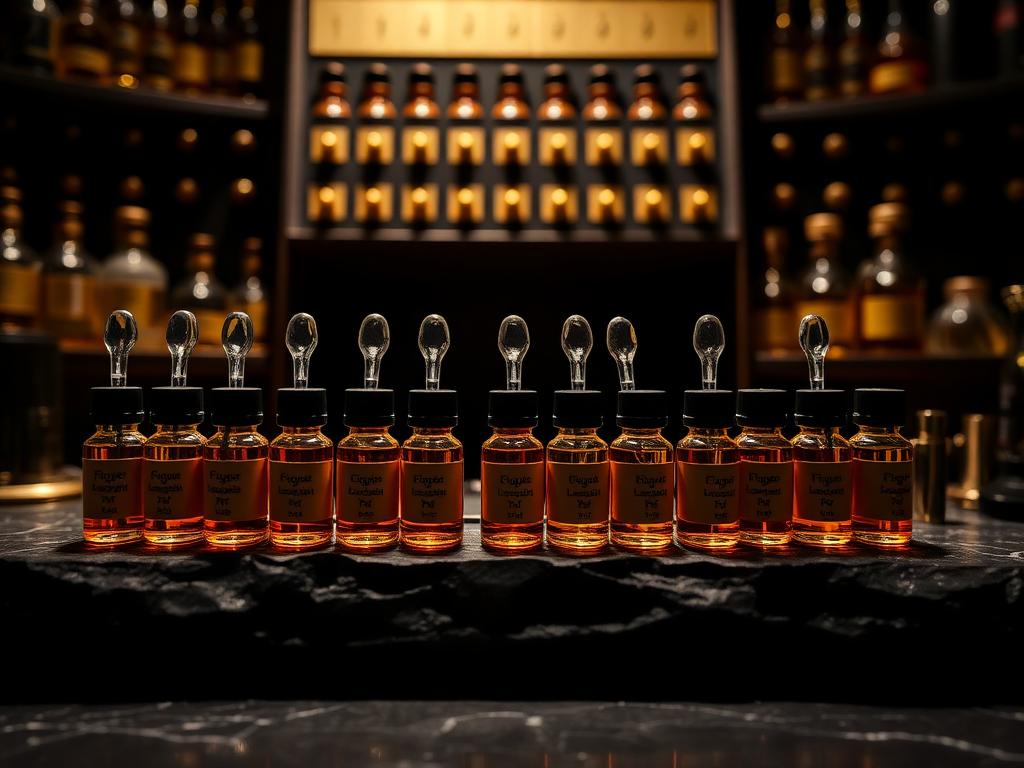
Typical fragrance oil concentration ranges for extrait, EDP, EDT, cologne, attar, candles and diffusers, with simple loading calculations.
Understanding Fragrance Concentration
Fragrance concentration plays an important role in the scent strength, character, performance and cost of a finished product. Whether you are developing a private-label perfume, an alcohol-free attar, a scented candle or a home fragrance diffuser, choosing the right fragrance oil concentration is an essential part of product development.
At Black Oud Factory, we supply concentrated fragrance oils for fragrance businesses and manufacturers. These oils can be used as ingredients in suitable finished-product formulations, depending on the intended application and the oil's technical specifications.
The amount of fragrance oil required depends on the product type, the base ingredients, the desired fragrance profile and the applicable safety and performance requirements.
Typical Perfume Concentration Levels
For alcohol-based perfumes, concentration is commonly expressed as the percentage of fragrance concentrate in the finished formula. The following ranges are general industry guidelines, not fixed standards. Actual concentrations vary by formulation and manufacturer.
1. Extrait de Parfum: 20–30%
Extrait de Parfum is a high-concentration fragrance format designed for a rich and expressive scent profile.
- Typical concentration: 20–30% fragrance concentrate.
- Base: Usually perfumer's alcohol, with other ingredients depending on the formula.
- Suitable for: Premium fragrance collections and luxury perfume products.
The final performance depends on the fragrance composition, application and individual formulation. A higher concentration does not automatically guarantee longer-lasting performance.
2. Eau de Parfum (EDP): 15–20%
Eau de Parfum is a widely used format for commercial perfume collections. It can offer a balance between fragrance character, intensity and production cost.
- Typical concentration: 15–20% fragrance concentrate.
- Base: Usually perfumer's alcohol.
- Suitable for: Retail perfumes, private-label collections and everyday fragrances.
The ideal concentration should be confirmed through formulation trials and evaluation of the finished perfume.
3. Eau de Toilette (EDT): 5–15%
Eau de Toilette generally uses a lower fragrance concentration than many EDP formulations.
- Typical concentration: 5–15% fragrance concentrate.
- Base: Usually perfumer's alcohol.
- Suitable for: Fresh fragrances, lighter perfume styles and selected commercial collections.
The appropriate percentage depends on the fragrance composition and the intended scent experience.
4. Eau de Cologne: 2–4%
Eau de Cologne is traditionally associated with lighter fragrance compositions.
- Typical concentration: 2–4% fragrance concentrate.
- Base: Usually an alcohol-based formulation.
- Suitable for: Light, refreshing fragrance products.
These figures are indicative. Commercial formulations may use different concentration levels.
5. Oil Perfume and Attar
Oil perfumes use an oil-based formulation rather than a conventional alcohol-based perfume base.
- Concentration: Varies according to the fragrance oil, carrier oil and finished-product requirements.
- Base: A suitable carrier oil or another compatible oil-based formulation.
- Suitable for: Attar, roll-on perfumes and selected alcohol-free fragrance products.
For an oil perfume, the fragrance concentrate is blended with a compatible carrier. The appropriate ratio depends on the ingredients, skin-contact application and safety assessment of the finished formula.
Black Oud Factory can discuss concentrated fragrance oils and oil-based perfume manufacturing options for businesses developing their own fragrance collections.
How Much Fragrance Oil Should You Use in Candles?
Candle fragrance loading is generally calculated as a percentage of the wax weight, rather than the total weight of the finished candle.
A commonly explored starting range is 6–10% fragrance oil by wax weight, but the correct amount depends on the wax, fragrance compatibility, wick, container and candle performance.
For example, if you are testing a candle with 1,000 g of wax:
- At 6% loading: 60 g of fragrance oil.
- At 8% loading: 80 g of fragrance oil.
- At 10% loading: 100 g of fragrance oil.
These are illustrative calculations, not a recommendation that every fragrance oil is suitable at these levels. Always follow the wax supplier's maximum fragrance load, the fragrance oil's technical guidance and the relevant candle safety requirements. Test the finished candle before commercial production.
What About Diffusers, Soaps and Body Care Products?
There is no single fragrance concentration that works for every non-perfume application. The formulation and usage limits depend on the product base and intended application.
Reed and home fragrance diffusers
The fragrance percentage depends on the diffuser base, the fragrance oil's compatibility and the required scent diffusion. Test the blend for stability, evaporation and performance in the intended container.
Soaps and wash-off products
The appropriate fragrance level depends on the soap formulation, processing method and applicable safety limits for the finished product.
Lotions and other body care products
Fragrance oils intended for skin-contact products must be suitable for the specific application. The permitted level can vary considerably between product categories.
For these applications, consult the fragrance supplier's technical documentation and relevant IFRA guidance for the intended product category. Do not assume that an oil suitable for candles or diffusers is automatically suitable for skin.
How to Calculate Fragrance Concentration
For most perfume formulations, the fragrance concentration can be calculated as follows:
Fragrance concentration (%) = Fragrance concentrate weight ÷ Total finished formula weight × 100
For example, a finished perfume formula weighing 100 g and containing 20 g of fragrance concentrate has a concentration of 20% by weight.
If you are preparing a 100 g formula at 15% fragrance concentration, the formula would contain:
- Fragrance concentrate: 15 g.
- Remaining ingredients: 85 g in total.
The remaining ingredients depend on the formula and may include perfumer's alcohol and other approved components. They should not automatically be treated as alcohol alone.
For production accuracy, use consistent units and follow the formulation's specified measurement method.
What Affects the Right Concentration?
Choosing a fragrance concentration is not simply about using more oil. Several factors influence the final result:
- Fragrance composition: Different scent profiles behave differently at different concentrations.
- Product base: Alcohol, carrier oils, wax and diffuser bases have different compatibility requirements.
- Desired fragrance character: The goal may be a subtle scent, a more expressive perfume or a particular diffusion profile.
- Product stability: The formula should be evaluated for compatibility, appearance and performance.
- Safety requirements: The finished formulation must meet the relevant requirements for its intended use.
- Manufacturing cost: Higher concentrate usage generally increases ingredient cost, although the actual difference depends on the materials and formula.
A practical approach is to prepare samples at selected concentrations, evaluate them in the intended base and compare their performance before approving the final formula.
Source Concentrated Fragrance Oils from Black Oud Factory
Black Oud Factory supports businesses looking for fragrance ingredients and manufacturing options for their own product lines. Depending on the oil and intended application, our team can discuss fragrance selection, product compatibility and private-label manufacturing requirements.
Need help selecting a fragrance oil for your product?
Contact Black Oud Factory with your intended application, preferred fragrance profile, estimated quantity and finished-product requirements. Our team can help you discuss suitable options and the next steps for your project.
- Email: blackoudfactory@gmail.com
- Phone / WhatsApp: +971 56 625 4829
Important: Concentration ranges in this guide are general reference points, not universal formulation or safety limits. Always verify the fragrance oil's technical documentation, application suitability, applicable IFRA requirements and relevant local regulations before manufacturing or selling a finished product.